
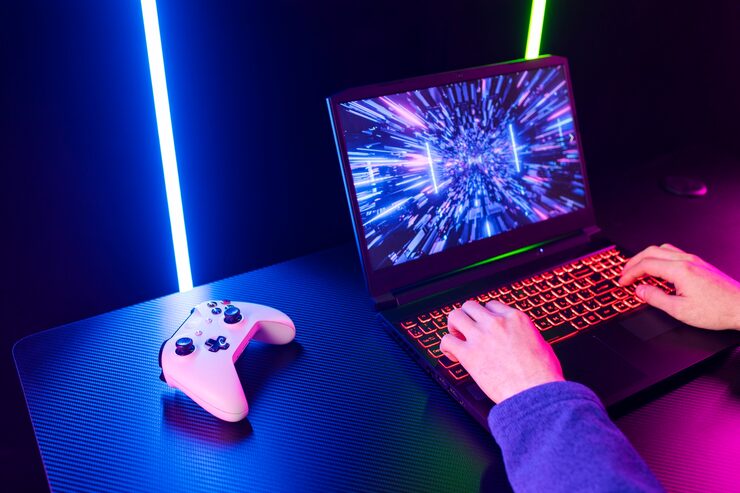
Buying a gaming laptop used to mean choosing between portability and real performance, but that trade-off has narrowed considerably. Whether the budget is tight or wide open, there is now a genuinely good option at nearly every price point, provided you know which specs actually matter for the games and settings you care about.
Budget Picks (Under £900)
At this price, expect a mid-range GPU paired with a 1080p display running at 60 to 120Hz. These machines handle competitive shooters and most current esports titles comfortably at high settings, though demanding open-world games will need medium settings to stay smooth. Look for at least 16GB of RAM and a 512GB SSD, since anything less becomes a bottleneck within the first year of use.
Mid-Range Picks (£900 to £1,500)
This is where most serious players land, and for good reason. A mid-tier GPU with 8GB of dedicated VRAM handles 1440p gaming at high settings across nearly every current release, and a 144Hz panel makes competitive play noticeably smoother. This range is also where cooling systems start to matter, since sustained performance during long sessions depends on the laptop being able to shed heat without heavily throttling the clock speed.
High-End Picks (£1,500 and Up)
Top-tier laptops now push 4K displays, high refresh rate 1440p panels, or both, alongside GPUs capable of ray tracing without a heavy frame rate penalty. Buyers at this level should prioritize display quality and thermal design over raw spec-sheet numbers, since two laptops with identical GPUs can perform very differently once one starts thermal throttling under sustained load.
A laptop’s internal speakers rarely do a game justice regardless of price point, so most serious players pair theirs with a proper headset. The considerations behind choosing VR headsets for immersive gameplay — comfort during long sessions, clear positional audio, and build quality that survives daily use — apply just as directly to a good gaming headset.
Specs That Actually Matter
GPU and display refresh rate get most of the attention, but RAM and storage speed shape day-to-day experience just as much. 16GB of RAM is the realistic minimum for modern titles running alongside a browser and Discord, and an NVMe SSD cuts load times dramatically compared to older SATA drives. Battery life on gaming laptops is still a genuine compromise; most drop to two or three hours under full gaming load regardless of the marketed all-day figures.
Hardware failures happen even on well-built machines, and a cracked hinge or dead fan does not have to mean replacing the whole unit. The same logic covered in why fast game console repair saves your gaming time applies to laptops too — a quick, competent repair is almost always cheaper and faster than a full replacement, provided the damage is caught early.
Getting the Timing Right
Prices on current-generation laptops typically drop soon after a new GPU architecture launches, so buying just before a refresh usually means paying a premium for soon-to-be-outdated hardware. Checking independent benchmark data before buying, such as the comparative reviews published by Tom’s Hardware, is a reliable way to confirm real-world performance rather than relying on marketed specs alone.
The right gaming laptop comes down to matching the GPU tier and display to the games actually being played, rather than chasing the highest spec sheet available. A well-chosen mid-range machine will outlast an overspent budget pick, and a little research before buying saves both money and disappointment down the line.